Designers lead
Every creative decision belongs to a person. Our software proposes, the designer disposes.
About RugAlchemy
We build tools that give carpet designers more time for what matters: judgment, taste and craft.
Our mission
Rug design is one of humanity’s oldest visual languages, from Anatolian kilims to Persian court carpets. Our mission is to make that language faster to work with, so more original designs reach the loom and more designers can build sustainable careers doing what they love.
Every creative decision belongs to a person. Our software proposes, the designer disposes.
Fields, borders, guls and repeats are first-class concepts in our models, not an afterthought.
A design is only finished when it can be woven. Knot density and yarn banks shape every output.
Our story
RugAlchemy began with a simple observation: the carpet industry had modernized its looms, logistics and retail, but the design process itself still depended on painstaking manual drafting.
We brought together textile designers who grew up around weaving workshops with machine-learning engineers who had never drawn a medallion. Together we spent 18 months studying how designers actually work: how a border resolves at the corner, why knot density changes motif scale, and what a mill needs in a production file.
The result is a platform that speaks the language of rugs fluently, and treats AI as a studio assistant rather than a substitute for the designer.
Yael Ben-David and Eitan Shapiro, from textile design and AI research, start working on the problem in Tel Aviv.
Early access with design studios and a weaving mill shapes the product.
Loom-ready, color-indexed exports launch for manufacturers.
Serving manufacturers, studios and retailers across 14 countries.
Our heritage
Before we wrote a line of code, we studied the visual grammar of the world’s rug-making cultures. These traditions are the foundation of everything RugAlchemy draws.
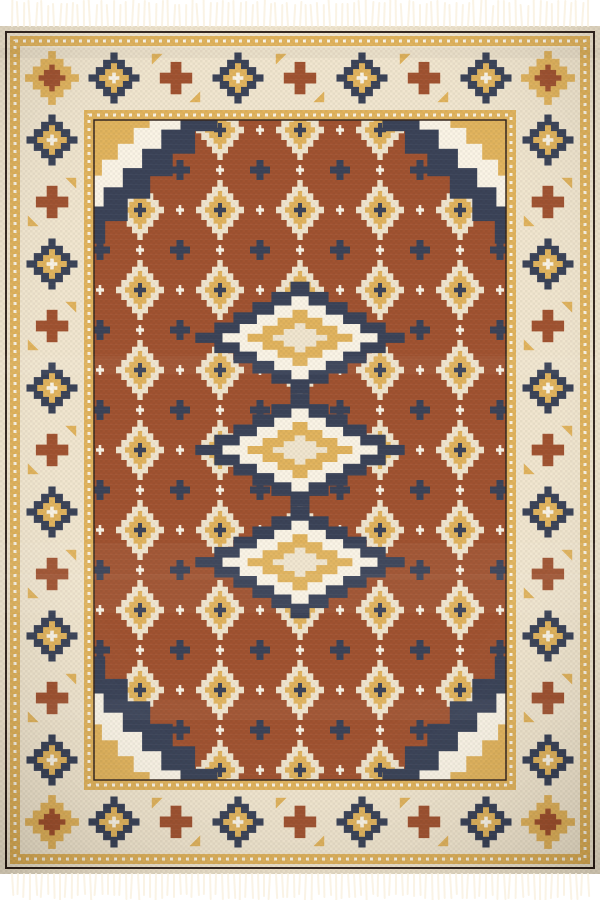
Central & Western Türkiye
Kilims and pile rugs woven for millennia, built on stepped geometry and natural dyes such as madder and indigo.
Signature motifs: Elibelinde, stepped medallions, hooks, reciprocal borders
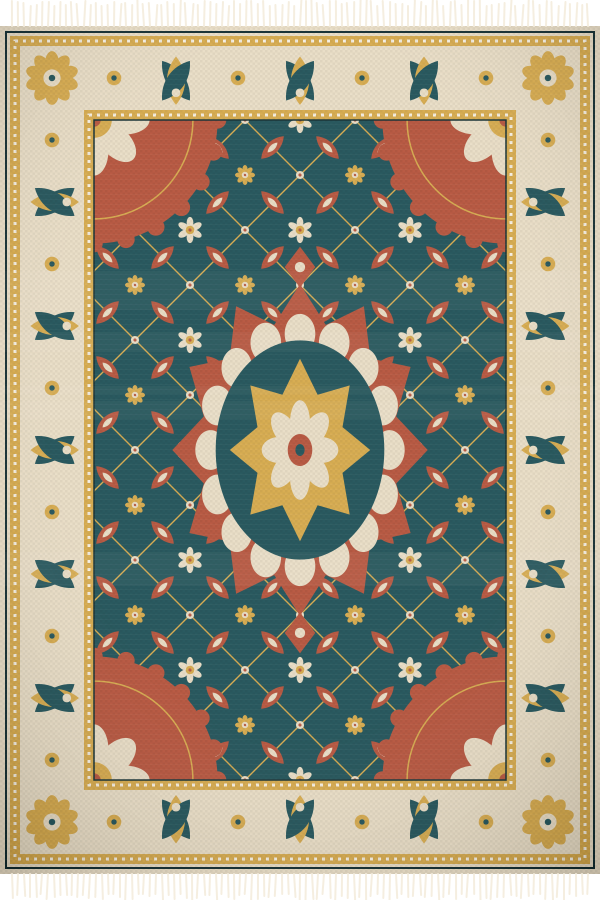
Iran
Court and city workshops refined curvilinear drawing to the highest level, with fine knotting and elaborate medallion layouts.
Signature motifs: Herati, boteh, shah-abbasi palmettes, lobed medallions
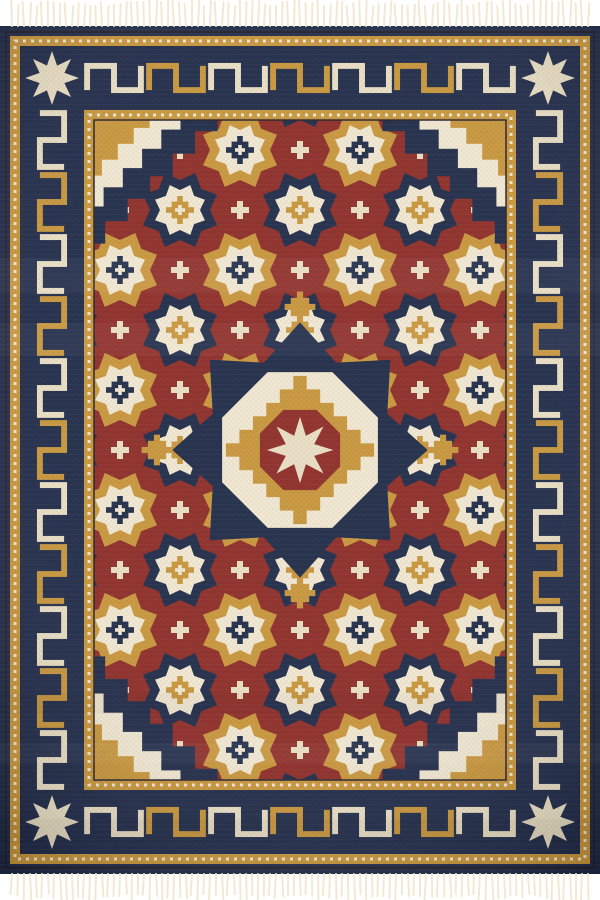
Between the Black and Caspian seas
Village rugs of bold scale and saturated color, prized for their graphic strength and confident drawing.
Signature motifs: Kazak stars, hooked guls, running-dog borders
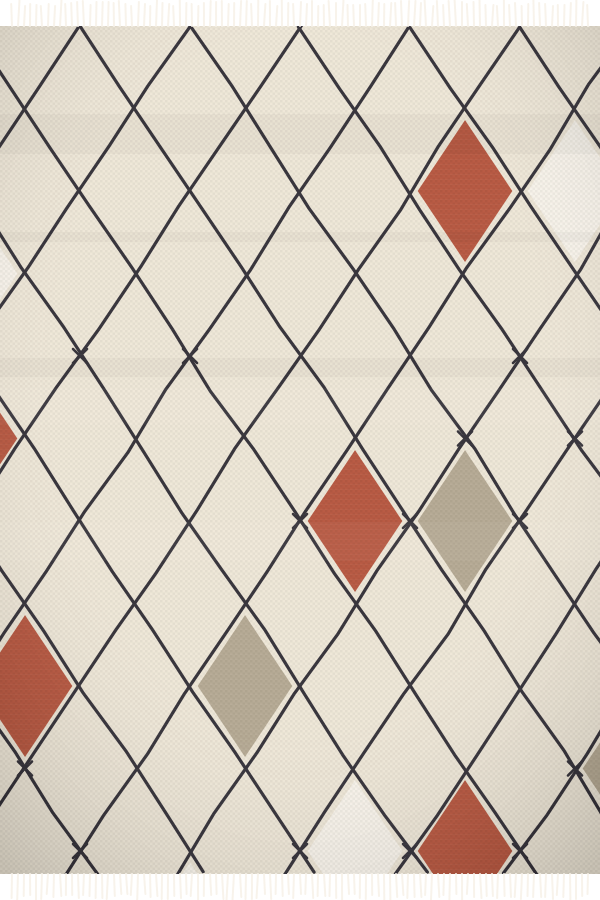
Atlas Mountains, Morocco
Berber weavers created deep-pile rugs with free, hand-drawn lattices and personal symbols, alongside colorful recycled-textile rugs.
Signature motifs: Lozenge lattices, Boucherouite color, protective symbols
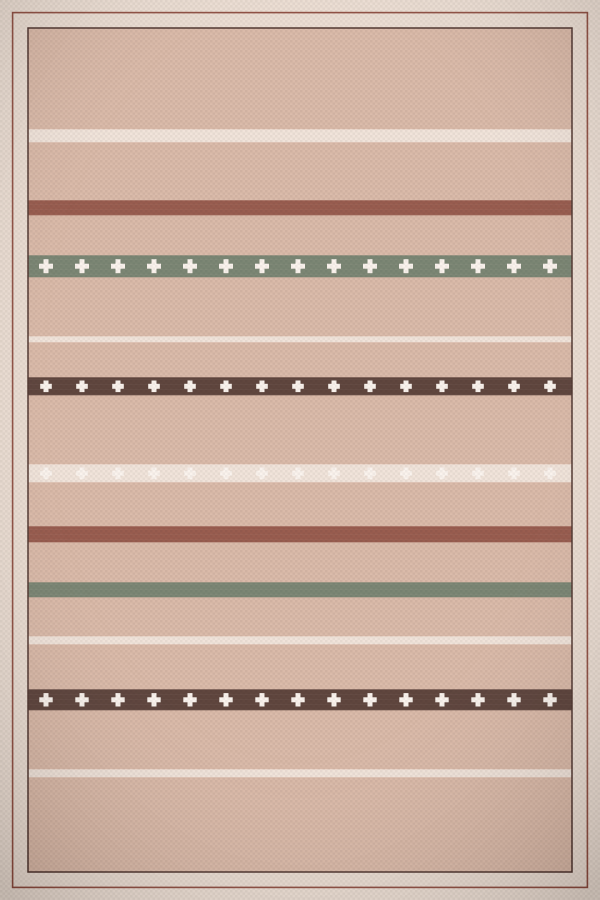
Nordic countries
Flatweave traditions such as röllakan favor restraint, rhythm and stripes, and remain a reference for modern interiors.
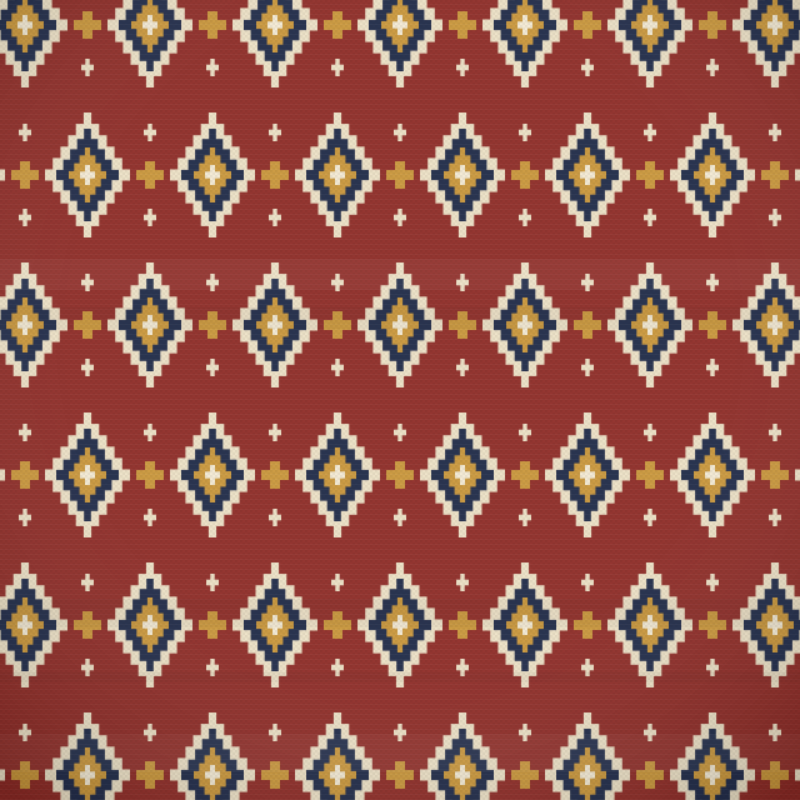
Signature motifs: Banded stripes, small crosses, diamond rows
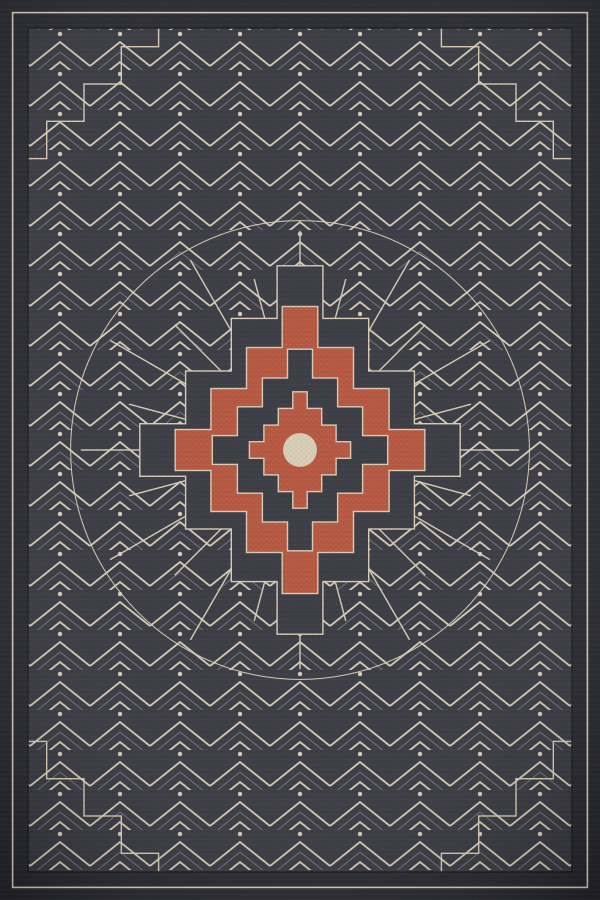
Europe & America, 1920s–30s
Designers translated machine-age glamour into textiles: symmetry, metallic tones and stylized natural forms.
Signature motifs: Fans, sunbursts, chevrons, stepped symmetry
How we work
Experienced pattern designers annotate structure, proportion and motif vocabulary, so our models understand rugs the way designers do.
Knot density, loom gauge, repeat sizes and yarn banks are built into generation, not bolted on at export.
Studios and mills shape our roadmap through continuous pilots, reviews and feedback sessions.
Our values
We respect the knowledge embedded in every weaving tradition and design our tools to honour it.
We push what’s possible with AI, always in service of real production workflows.
We help create genuinely new designs and protect our customers’ intellectual property.
We build alongside designers, mills and retailers, and succeed only when they do.
A great rug carries the hand of its maker. Our job is to give designers more hours for that hand, not to take it away.
Responsible AI
AI in a cultural craft carries responsibility. These are the principles we hold ourselves to.
We build our models to compose new designs, not to reproduce existing protected works.
Customer uploads and designs are private to each workspace and never used to train models for others.
We credit the cultures behind each style and support initiatives that keep traditional weaving alive.
We are open about what our tools can and cannot do, and how designs are generated.
Questions about how we build and use AI? Write to us at [email protected].
Our team
A team spanning carpet design, weaving production, machine learning and product engineering.
Co-founder & CEO
Co-founder & Head of Design
Chief Technology Officer
Head of Textile Production
Lead ML Engineer
Customer Success, Textiles
We’re hiring designers and engineers who care about craft. If you speak both loom and code, or want to learn, we’d love to hear from you.
See RugAlchemy working on your own motifs, palettes and production constraints in a 30-minute session with our textile team.